


How to Prepare for ACL Reconstruction: 6 Essential Pre-Surgery Steps

An ACL tear can be one of the most disorienting injuries you'll ever go through, especially if you're someone who plays sports regularly or leads an active life. One moment you're moving freely, and the next, your knee gives way, and everything changes. If surgery has been recommended, the journey ahead might feel overwhelming. But here's the truth most people don't hear early enough: how well you prepare before surgery matters just as much as the surgery itself.
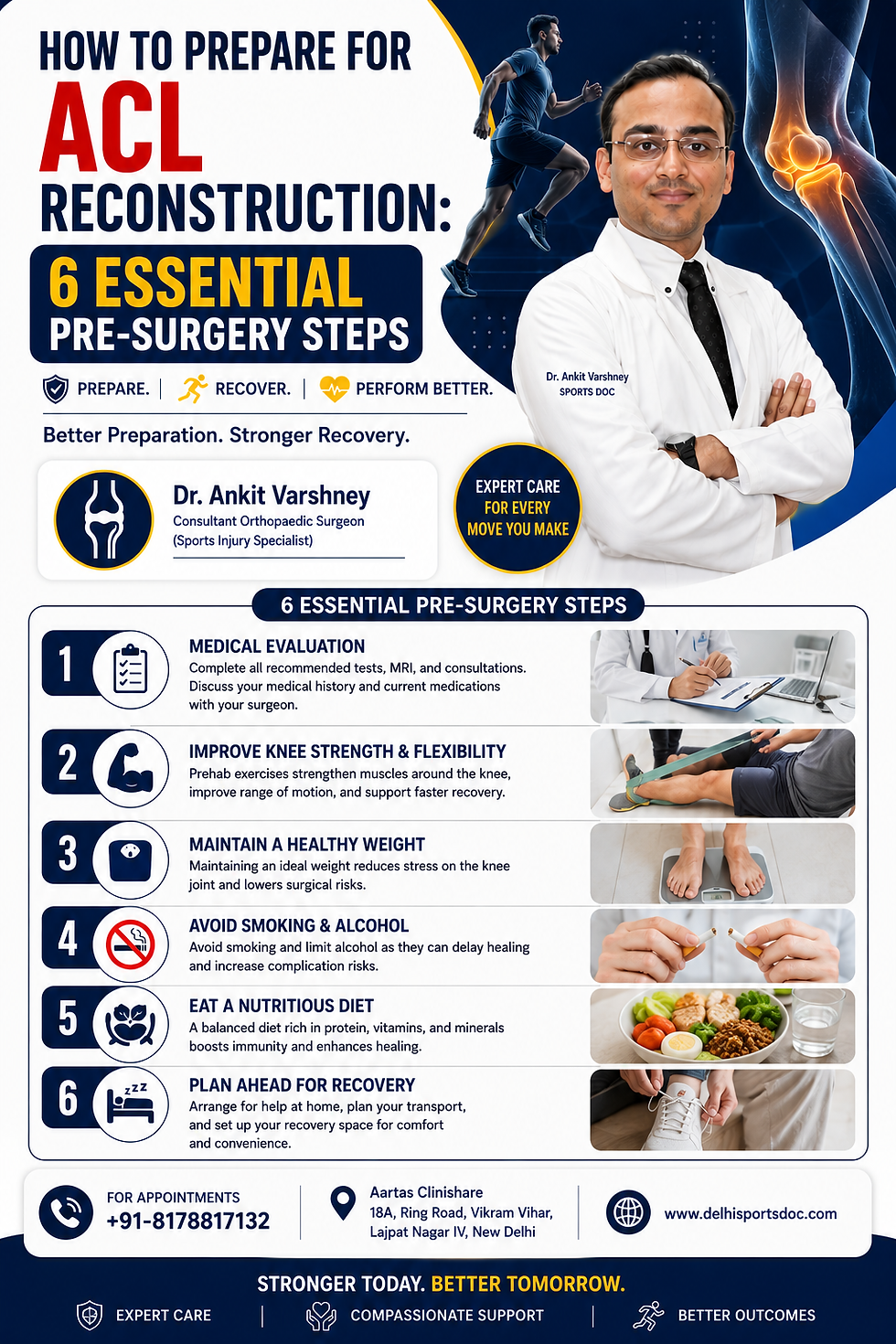
Whether you've recently been diagnosed or your procedure is already scheduled, this guide, based on clinical insights from Dr. Ankit Varshney, recognized as the best ACL surgeon in Delhi, walks you through six essential steps to prepare your body and mind before going into the operating theatre.
Why Pre-Surgery Preparation Matters
Many patients focus entirely on post-operative recovery and underestimate what happens in the weeks before. But surgeons know that patients who are physically and mentally prepared tend to recover faster, regain strength more completely, and face fewer complications. Think of the pre-surgery phase as laying the groundwork for everything that follows.
Step 1: Understand Your Injury and the Procedure
The first, and most underrated, step is simply understanding what you're dealing with. The anterior cruciate ligament (ACL) is one of the key stabilizing ligaments in your knee. When it tears, the knee loses its ability to hold firm during twisting and pivoting movements.
ACL reconstruction involves replacing the torn ligament with a graft, usually taken from your own hamstring tendon or patellar tendon. It's done arthroscopically, which means smaller incisions, less trauma to surrounding tissue, and a cleaner recovery path compared to open surgery.
Before your procedure, make sure you:
● Ask your surgeon exactly which graft type is being used and why
● Understand what the rehabilitation timeline looks like
● Know what activities to avoid in the weeks leading up to surgery.
● Get clarity on anaesthesia, hospital stay, and what to expect on the day.
Being informed reduces anxiety and helps you make better decisions throughout the process.
Step 2: Reduce Swelling and Restore Baseline Knee Movement
Many ACL surgeries are delayed deliberately, and for good reason. Operating on a swollen, stiff knee increases the risk of post-surgical stiffness and poor outcomes. Before the procedure, your surgeon will want your knee to be as calm and mobile as possible.
Practically, this means:
● Icing your knee regularly (15–20 minutes at a time, several times a day)
● Keeping your leg elevated when resting to reduce fluid buildup
● Avoiding activities that aggravate pain or increase swelling
● Doing gentle range-of-motion exercises as guided by your physiotherapist
The goal is to get your knee bending and straightening as close to normal as possible before the operation.
Step 3: Start Prehabilitation (Pre-Surgery Physiotherapy)
This is where preparation really pays off. Prehabilitation, or "prehab,” refers to physiotherapy you do before surgery to strengthen the muscles around your knee. Research consistently shows that patients who do prehab recover faster and regain functional strength more effectively post-surgery.
Your prehab programme will typically focus on:
● Quadriceps activation — helping the front thigh muscles stay engaged and strong
● Hamstring strengthening — especially important if a hamstring graft is being used.
● Hip and glute exercises — building the foundation your knee relies on
● Balance and proprioception training — retraining your body's joint awareness
Even four to six weeks of consistent prehab can make a significant difference in how quickly you walk again after surgery.
Step 4: Sort Out Your Nutrition and General Health
Surgery puts real stress on your body, and what you eat in the lead-up genuinely affects how well you heal. This isn't about crash diets or supplements; it's about giving your body the building blocks it needs to repair tissue efficiently.
Focus on:
● Adequate protein intake — essential for muscle preservation and tissue repair
● Vitamin C and zinc — support wound healing and collagen production
● Iron and B12 — especially if blood tests show any deficiency
● Staying well hydrated — dehydration affects anaesthesia tolerance and recovery.
If you smoke, stopping even a few weeks before surgery meaningfully reduces complications. Alcohol should also be minimised. Your surgeon may order pre-operative blood tests to flag any nutritional concerns. Take those results seriously.
Step 5: Prepare Your Home and Support System
This step gets overlooked, but coming home after ACL surgery to an unprepared environment creates unnecessary stress during a vulnerable period. You'll be on crutches, limited in movement, and dependent on others for several days at least.
Before surgery day:
● Set up a recovery area on the ground floor, if possible, to avoid stairs.
● Stock up on meals, medications, and basic supplies for at least a week.
● Arrange for someone — a family member or friend- to accompany you to the hospital and stay with you for the first 24–48 hours.
● Keep essentials like your phone, charger, water, and medications within arm's reach.
● Place a pillow or cushion nearby for leg elevation when resting.
Small practical arrangements like these make a surprisingly big difference to your comfort and recovery speed in the early days.
Step 6: Follow All Pre-Operative Medical Instructions
In the days leading up to your ACL surgery in Delhi NCR, your surgical team will give you specific instructions that must be followed carefully. These are not optional guidelines; they directly affect the safety and success of your procedure.
These instructions typically include:
● Fasting requirements — usually nothing to eat or drink for 6–8 hours before surgery
● Medication adjustments — blood thinners, anti-inflammatories, or certain supplements may need to be paused.
● Skin preparation — you may be asked to bathe with an antiseptic wash the night before
● What to bring and wear — loose, comfortable clothing and no jewellery or nail polish
● Confirming your arrival time — and arranging transport home post-procedure
If you're on any regular medications or have other health conditions, make sure your surgeon is fully aware well in advance, not just on the day.
A Final Word Before You Go In
An ACL injury is serious, but it's also very treatable. Thousands of athletes, from professional cricketers to weekend footballers, have gone through this surgery and returned to full, active lives. The preparation phase is your chance to take control of something in a situation that can feel very out of your hands.
If you're looking for guidance on your ACL injury or would like to consult with an experienced ACL ligament surgeon in Delhi, Dr. Ankit Varshney and his team at Delhi Sports Doc are here to help. With fellowships from leading institutions in India, South Korea, and Singapore, Dr. Varshney brings world-class expertise and genuinely patient-focused care to every consultation.
Ready to take the next step? Call +91-8178817132 or visit delhisportsdoc.com to book your appointment.


Comments